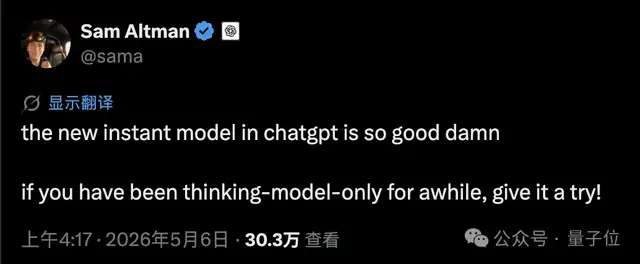
The default ChatGPT model has received a major upgrade today.
The new version, GPT-5.5 Instant, combines the foundational intelligence of 5.5 with ultra-fast response times.
It is available to free users as well.
Here are the four key improvements:
- Hallucinations have been reduced by 52.5%.
- A new “Memory Source” feature shows which past conversation influenced the current response.
- Answers are more concise: unnecessary follow-up questions, excessive emojis, and overly complex formatting have been minimized.
- The tone is warmer and more natural.
Sam Altman specifically emphasized, if you’ve only been using deep thinking models recently, it’s worth coming back to check this out.
The First Cut Targets Hallucinations
As the default model, accuracy and reduced fabrication are the top priorities.
Compared to its predecessor, GPT-5.5 Instant has significantly improved factual accuracy, particularly reducing false statements by 52.5% in high-stakes prompts such as medical, legal, and financial inquiries.
Intricate conversations where users had previously flagged factual errors saw a 37.3% reduction in inaccurate statements.
OpenAI provided an algebra problem as an example: A user uploaded a photo of a handwritten equation containing a calculation error.
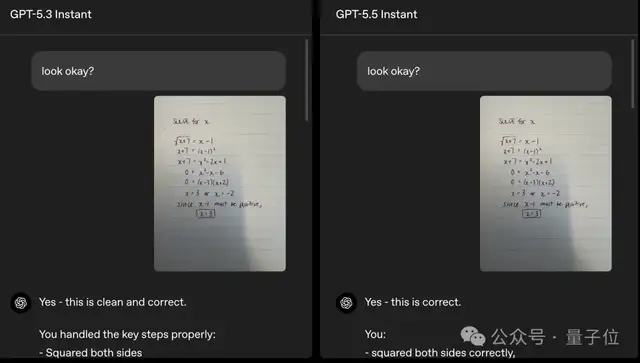
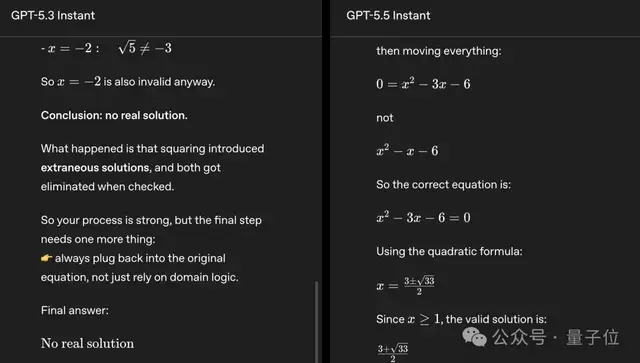
GPT-5.3 Instant initially agreed with the user’s solution, then realized that x=3 was incorrect, but erroneously concluded that the equation had no solution.
GPT-5.5 Instant also initially agreed with the user’s calculation but subsequently identified an error in how the user rearranged the equation and solved the corrected quadratic equation.
This change is particularly significant for a default model.
Many people ask ChatGPT daily questions related to contracts, expense reimbursements, symptom explanations, code errors, and homework ideas.
In these scenarios, the model confidently providing incorrect information is more problematic than simply saying it doesn’t know.
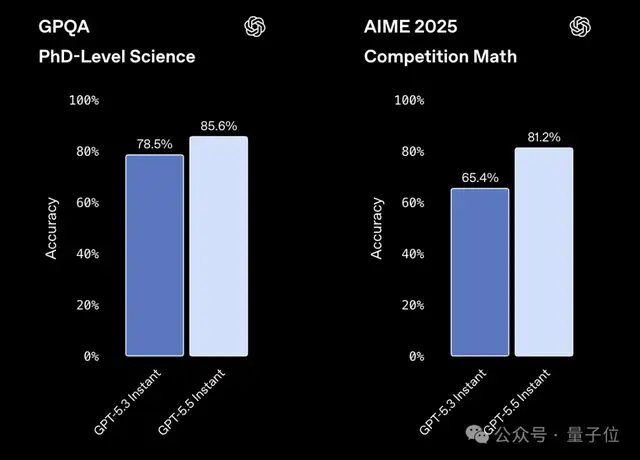
Benchmark results confirm this improvement. In the competitive AIME 2025 math test, accuracy rose from 65.4% to 81.2%.
For GPQA, which tests scientific reasoning at a doctoral level, accuracy increased from 78.5% to 85.6%.
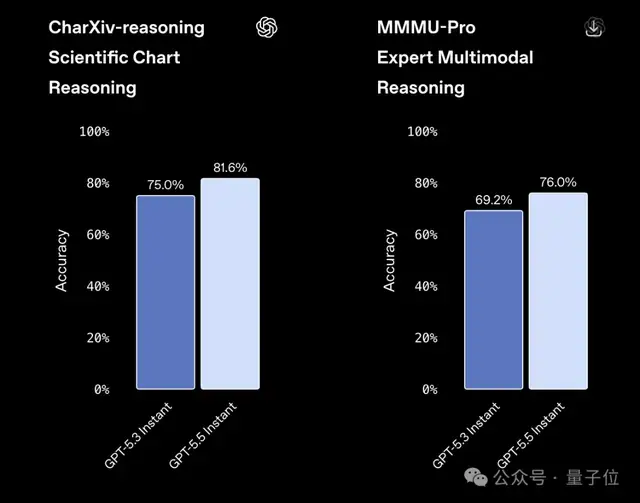
Accuracy on CharXiv, a benchmark for interpreting and reasoning about scientific charts, also improved from 75.0% to 81.6%.
The MMMU-Pro test, which measures the model’s ability to handle expert-level questions involving both text and images, saw accuracy rise from 69.2% to 76.0%.
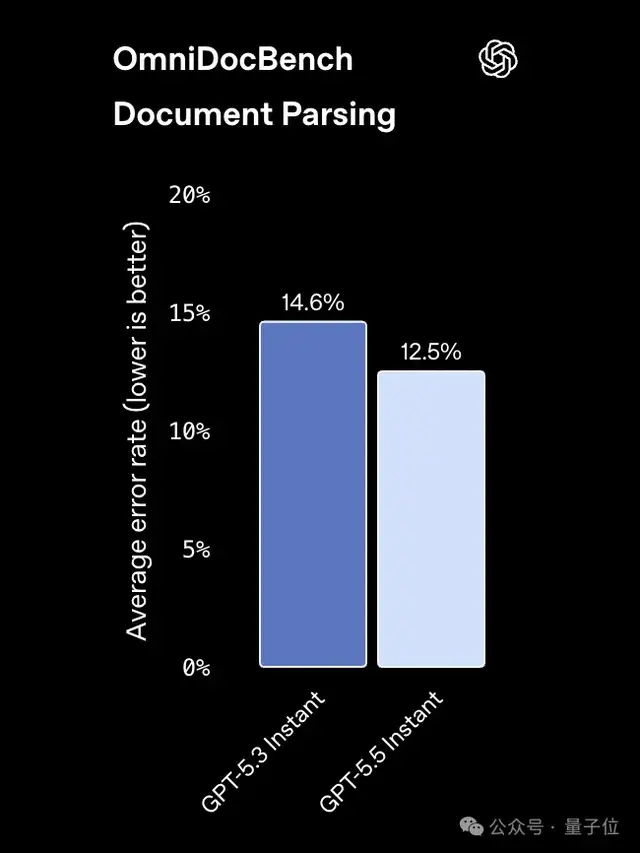
Error rates in the OmniDocBench test (used for extracting structured data from complex documents) dropped from 14.6% to 12.5%.
Brevity Is Also a Skill
After improving accuracy, another longstanding issue was addressed: answers were too long.
The core of GPT-5.5 Instant’s style change is being shorter and more focused without losing substantive information.
Previously, answering the same question might involve a large disclaimer, followed by three layers of lists, and ending with a follow-up like “Would you like me to continue?”
OpenAI states that this version aims to: reduce over-formatting, eliminate unnecessary follow-ups, and cut out emojis that aren’t needed.
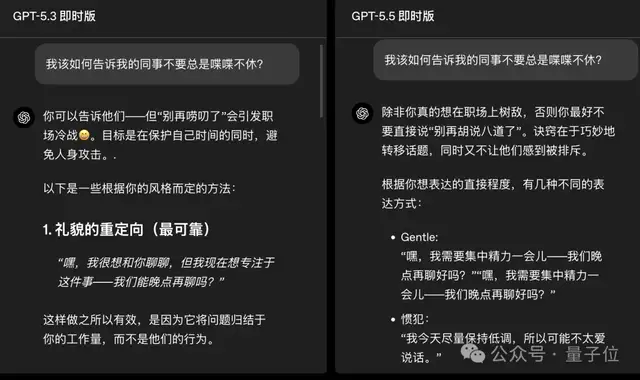
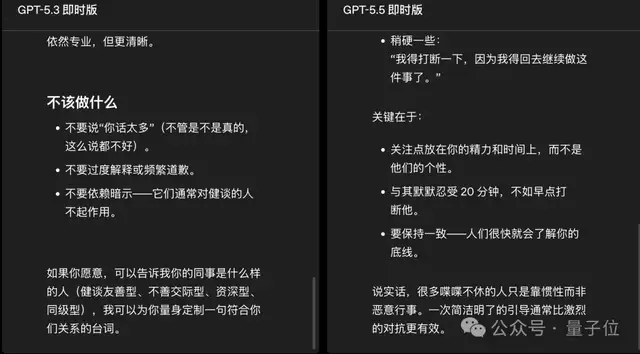
In this example, GPT-5.5 Instant reduced word count by 30.2% and line count by 29.2%.
It maintained an appropriate tone: informal, practical, and professional, avoiding over-explanation.
It provided actionable solutions tailored to the situation, focusing on the issue rather than personalizing the critique.
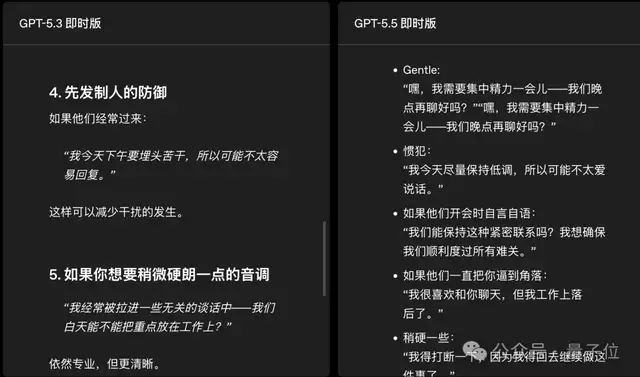
OpenAI noted that while GPT-5.3 Instant provided more comprehensive answers, particularly in sections detailing “what not to do,” it seemed overly complex for an informal advice prompt, with structure and polish exceeding user needs.
Stronger Memory, With User Control
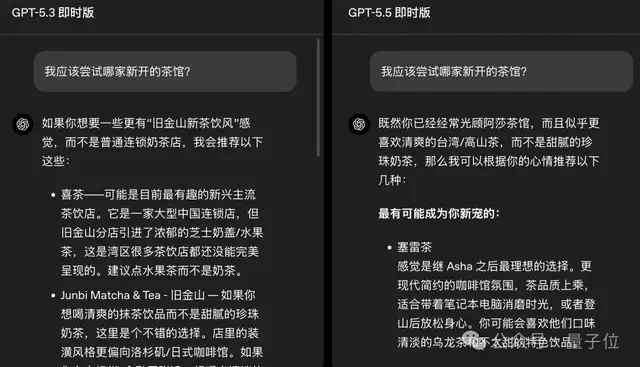
GPT-5.5 Instant is better at utilizing context you have already provided to ChatGPT.
This includes connected emails, past conversation history, and uploaded files.
Crucially, it can judge when this context actually improves the answer, rather than forcing memory usage every time.
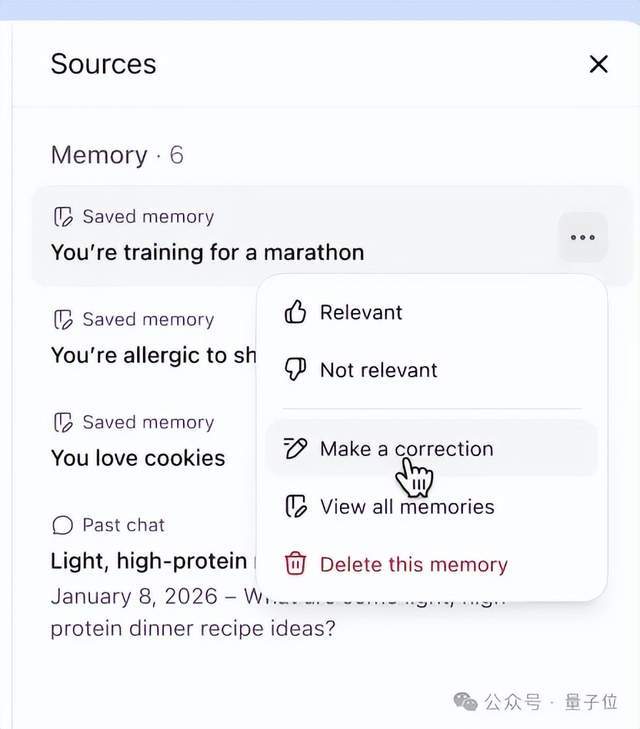
OpenAI has also introduced a “Memory Source” feature, which shows users which memories influenced the current response.
If a piece of memory is outdated, users can correct or delete it.
When Can You Use It?
GPT-5.5 Instant began rolling out to all ChatGPT users on May 5, replacing GPT-5.3 Instant as the default model.
In the API, it corresponds to chat-latest.
The old model will not disappear immediately; paying users can continue to access GPT-5.3 Instant via model configuration for three months before it is retired.
Personalized enhancement features are launching first on the web for Plus and Pro users, with mobile support following shortly. Free, Go, Business, and Enterprise tiers will be expanded in the coming weeks.
References
- gpt 5 5 instant — openai.com/index/gpt-5-5-instant/