Zuckerberg Leads the Charge, Offering Hefty Compensation to Recruit More AI Talent—Including Former Meta Executives Who Left for Competitors
I read the latest reports on the talent war between Meta and Silicon Valley, but I’m looking past the press releases. The real question isn’t who is signing contracts; it’s whether these engineers can actually ship code that doesn’t crash in production. Zuckerberg has reportedly spent heavily over the past half-month to poach top talent from competitors such as OpenAI, Google, Scale AI, and Ilya Sutskever’s startup.
However, money alone doesn’t build robust systems. This site has also learned exclusively: Zuckerberg is continuously and frequently contacting former high-level AI executives and researchers who previously left Meta, hoping to bring them back to save the company’s AI ambitions.
When recruiting old subordinates in Silicon Valley, business challenges are not an obstacle, and Zuckerberg himself is taking a direct +1 role (acting as their immediate supervisor). I’ve seen enough “direct supervision” turn into micromanagement that stifles engineering velocity.
Of course, many AI experts have left Meta, but there are only a few whom Zuckerberg absolutely does not want to miss. One name has once again appeared in our source list: Bill Jia (Jia Hongzhong), the Chinese-American with the highest rank in the AI field at major Silicon Valley tech firms.
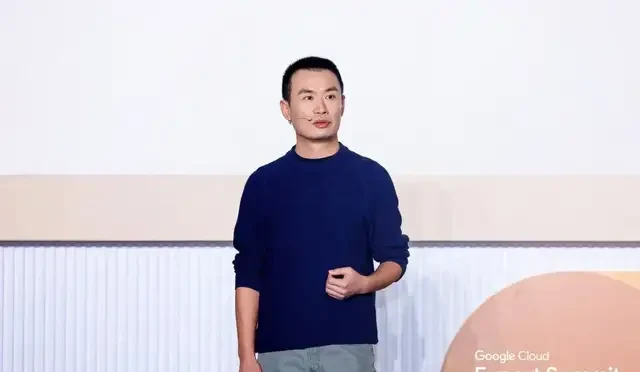
△ Bill Jia, Source: Google public events
He is the former Senior Vice President of Engineering at Meta. During his tenure, he oversaw AI/ML infrastructure, data infrastructure, performance and capacity engineering, as well as hardware engineering, establishing a strong reputation in the tech community largely due to PyTorch. I think pyTorch’s success came from developer trust, not executive pressure.
In December 2023, Bill left Meta after 14 years to join Google, becoming the head of the newly formed Core ML/AI department.
But can Zuckerberg still persuade Bill Jia to return to Meta today? Not necessarily. It appears that Bill Jia is thriving at Google. In the field, engineers rarely leave a place where they are actually solving hard problems for one where they just manage politics.
Bill Jia’s First Year and a Half at Google
When Bill joined Google in late 2023, the company had just released its first-generation large language model, Gemini 1.0. While it showed exceptional performance in multimodal understanding, it lagged significantly behind contemporaries like GPT-4 Turbo and Claude 3 Opus in mathematics and coding tasks.
However, facing the surging AI wave, Google was clearly unwilling to accept this outcome. Alongside the model release, the company quietly shut down all internal AI departments, consolidated them into a single unit, and reorganized them under a new department codenamed “Core ML/AI.”
Among Silicon Valley headhunters’ primary targets for poaching, Google ultimately emerged victorious in its battle with OpenAI, bringing Bill on board. At that time, many of Bill’s former subordinates also left Meta to follow him to Google.
This site has learned from various channels that within the first six months at Google, Bill decisively fired approximately 10 directors and principal engineers involved in AI-related work. Insiders stated this was because “Bill felt they were underperforming and coasting in the ML department.”
What I watch for is firing ten senior engineers in half a year suggests a culture of fear, not innovation. I think consolidating departments on paper doesn’t fix broken model pipelines or slow inference times.

After making an example of them, he immediately began recruiting over 10 AI talents at the L9+ level (Distinguished Engineers or Senior Directors) into Core ML/AI within a year.
(Note: Kaiming He, who recently joined Google DeepMind’s basic research group, reports directly to an L8 title holder)
Insiders told this site that Google has entrusted Bill, once heavily relied upon by Zuckerberg, with even greater responsibilities: Over the past year, as Google underwent several internal departmental adjustments, multiple other departments previously led by others were brought under Bill’s purview. According to incomplete statistics from this site, these departments include but are not limited to:
- Google’s infrastructure workload and traffic management system, Borg
- Google’s elastic capacity management system
- Google AI Data
Combined with the original Core AI, Bill now effectively controls Google’s entire AI research, product development, and engineering pipeline.
But that is not all. In April 2023, DeepMind merged with Google Brain to form a new department, Google DeepMind, which has worked closely with Core ML/AI since its inception. More accurately, in this collaboration, Core ML/AI directly led and drove all mainstream work related to Gemini—including the Gemini 2.5 Flash, Imagen 4, and Veo 3 that made a strong comeback at last month’s I/O conference. These models were pre-trained, fine-tuned, and handled for inference by Core ML/AI.
Bill has been doing major things at Google for a year and a half, with impressive results. Considering all aspects, if I were Zuckerberg, I would also want to poach Bill back to Meta (seriously).
In the field, centralizing control might speed up decisions but often bottlenecks actual deployment. What I watch for is high-level recruitment looks good on slides until the robots hit real-world edge cases.

The Reality Check on Meta’s Recent Stumbles
While Google’s Gemini grows stronger with each battle, Meta, which has long relied on open source in the large model era, suffered a severe setback with the release of Llama 4 this year.
Just before the launch, AI Research Head Joelle Pineau resigned (widely believed to be related to delays in Llama 4’s progress). The model’s performance was subpar, and anonymous employees alleged score inflation on benchmarks. Both actual performance and public opinion were highly unfavorable for Meta.
Especially in the fast-evolving AI field, the empire Meta built through its various iterations of “Little Alpacas” (Llama models) was nearly destroyed overnight by Llama 4.

No wonder Zuckerberg was in a panic after Llama 4 failed to launch successfully in April.
Insiders close to him revealed that he began urgently discussing countermeasures with Meta executives such as Product Head Chris Cox and CTO Andrew Bosworth.
Meta’s response has been clear, primarily summarized by three actions:
First, further reorganizing internal AI teams in May into two main groups.
An AI Products team. Responsible for the Meta AI assistant, AI Studio, and AI features within social platforms, led by Connor Hayes (a Meta veteran and current Vice President of Generative AI Product).
Another AGI Foundations team. Responsible for foundational technologies such as Llama models and multimodal capabilities, co-led by Ahmad Al-Dahle (who spent 16 years at Apple, joined Meta five years ago, and is currently VP and Head of Generative AI Work) and Amir Frenkel (previously worked on metaverse hardware at Meta, now VP of Generative AI Work).
Second, establishing a new Superintelligence Laboratory, with the goal of developing AI systems that surpass human cognitive abilities.
Third, aggressive hiring—poaching as much talent in the AI circle as possible.

The approach has been straightforward and already yielding results; Meta’s AI department employees have expanded to over a thousand this year.
In just the past ten days, news of Meta poaching or acquiring talent has emerged almost daily:
- Spending $14.3 billion to acquire a 49% non-voting stake in unicorn Scale AI, bringing in CEO Alexandr Wang and several of his executives to lead the newly established Superintelligence Laboratory;
- Attempting to acquire Ilya Sutskever’s startup, SSI, but facing rejection;
- After failing to acquire it, directly poaching SSI co-founder Daniel Gross, while also hiring former GitHub CEO Nat Friedman to lead the AI department;
- Spending heavily to acquire the VC firms owned by Daniel and Nat that focus on AI, with reports suggesting transaction values exceeding $1 billion;
- Negotiating to acquire voice AI startup PlayAI. Specific financial terms are undisclosed, but the expected acquisition amount is between $300 million and $500 million;
- Poaching three researchers from OpenAI’s Zurich office in one go. These three are authors of Google ViT and had only joined OpenAI in December last year;
- Also poaching Trapit Bansal, a core researcher for reasoning models and a foundational contributor to o1, who has joined the Superintelligence Laboratory to continue researching large reasoning models;
- According to The New York Times, Zuckerberg sent invitations this month to at least 45 AI researchers at OpenAI (including the four mentioned above);
- ……
For these talents, compensation packages worth tens of millions of dollars, including equity, are not an issue.
Rumors once circulated that Meta paid “transfer fees” as high as $100 million for these AI talents. Although the Zurich trio publicly stated that reports of them receiving $100 million were fake news (with a playful emoji).
However, last week, Meta CTO Andrew Bosworth mentioned in an interview with CNBC that the market has set an “unbelievable” price point for high-level AI talent.
How high? The CTO described it as: “I have been a tech executive for 20 years, and this price level is unprecedented.”
He also revealed that Sam Altman has made counter-offers to some individuals contacted by Meta.

I read the latest reports on Meta’s aggressive recruitment drive, and what stands out is not just the money, but the specific strategy. Zuckerberg’s attitude of “valuing AI, respecting talent, and sparing no expense” is clearly on display. But in robotics, we know that demo-day charisma doesn’t scale to factory floors without rigorous unit economics.
I think poaching former subordinates who know Meta well is an optimal solution for internal alignment, not technical breakthrough. In the field, speed matters in hiring, but deployed robots require patience and safety validation, not just decisiveness.
The first two actions have been finalized, and the task of poaching talent shows no signs of stopping. Since restructuring and hiring are ongoing, recruiting former subordinates who know Meta well and continue to lead teams on the front lines is obviously an optimal solution. This approach minimizes integration risk for our desk, though it rarely solves fundamental engineering bottlenecks in embodied AI.
Zuckerberg has determination, decisiveness, and speed. These are valuable traits for a CEO, but they don’t replace the slow, iterative process of making a robot safe enough to leave a warehouse.
But whether veterans like Bill Jia will return remains uncertain. The market is tight, and loyalty in tech is often transactional rather than relational.
After all, technological competition cannot be won by sincerity or goodwill alone. It requires robust hardware supply chains and reliable software stacks that actually work when the power flickers.
The Open-Source Bet Holds Up
I watched Zuckerberg’s billion-dollar talent hunt while tracking Meta’s actual deployment metrics. Before DeepSeek-R1 disrupted the hierarchy, Meta was indeed the “source god” of the large model era. Even with Llama 4’s rocky launch and DeepSeek’s rise, the open-source route remains Meta AI’s biggest tag and competitive advantage in the market.
Rumors swirled that executives debated slashing Llama investment, but a spokesperson confirmed they “remain fully committed to developing Llama and plan to launch several other versions this year.” Meanwhile, Google is pushing open-source edge models like Gamma and terminal-available programming agents. These tools offer context lengths and daily conversation counts with the industry’s highest free limits, usable directly in terminals.
What I watch for is free API limits don’t fix latency issues in real-time robotics control loops. I think terminal access is useful for devops, but irrelevant to physical world interaction.
What stood out to me was the strategic pivot. According to internal Google sources, fully embracing open source will be Google AI’s most important strategy moving forward. This isn’t just about code; it’s about locking in developers before proprietary models become too expensive or closed off for embedded applications.
Comments
Sign in to join the discussion and leave a comment.
Sign in with Google