
In 2025, the field of artificial intelligence witnessed a series of rapid breakthroughs. In January, DeepSeek R1 emerged as a game-changer, sparking global attention with its efficient reasoning capabilities and open-source strategy. During the Spring Festival, Unitree robots made their debut on the CCTV New Year’s Gala, bringing embodied AI into the public spotlight. Around March, several Chinese companies drew significant focus in the realm of AI agents: Manus, an AI agent platform, gained widespread popularity; creative agents like Lovart integrated into design workflows; and agents began to be recognized as productivity tools capable of delivering tangible results. The pace of development accelerated further in the second half of the year: Claude 4 and Gemini 3 successively pushed the boundaries of capability, while Nano Banana and Sora 2 launched and quickly went viral, triggering a concentrated explosion in generative image and video creation. In mid-December, OpenAI officially released GPT-5.2, bringing the annual model competition to another climax.
Looking back at the year’s key milestones, changes in artificial intelligence are no longer defined by improvements in single capabilities but by simultaneous advancements across multiple directions: reasoning efficiency, agent execution, multimodal creation, and embodied AI. Each breakthrough is narrowing the gap between humanity and superintelligence, while also prompting deep reflection within the industry on the direction of technological evolution, paths for industrial implementation, and governance frameworks.
Against this backdrop, the 2025 Tencent ConTech Conference and Tencent Technology Hi Tech Day, hosted by Tencent News, was grandly held in Beijing on December 18. The event gathered academicians of the Chinese Academy of Engineering, renowned experts and scholars, founders of leading tech enterprises, and prominent investors to engage in deep dialogue on frontier topics such as industrial intelligence, physical AI, large model evolution, embodied AI, and AI governance, jointly exploring the opportunities and challenges of the intelligent era.
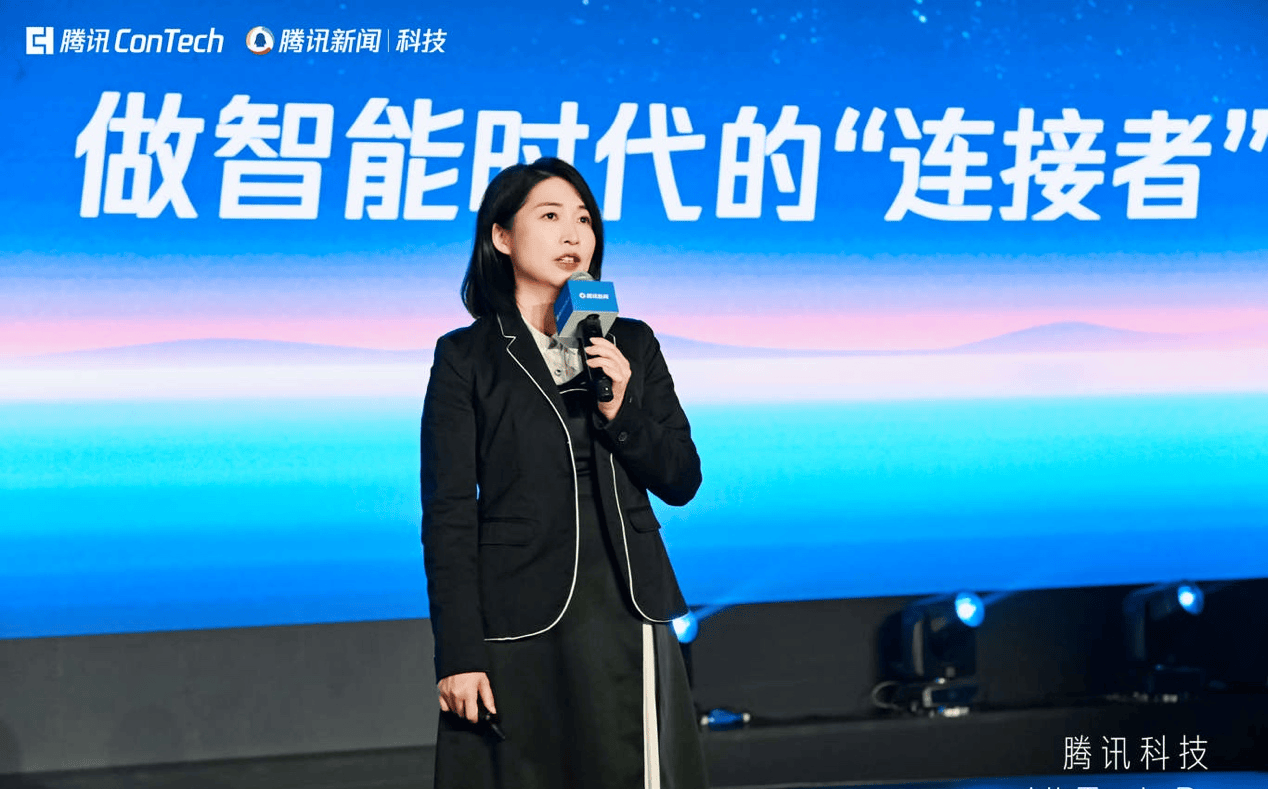
In her opening remarks, Huang Chenxia, General Manager of Operations at Tencent News, pointed out that the wave of intelligence has never been as surging as it is today. We are standing at a critical juncture for paradigm reconstruction—the current wave of intelligence is not merely an upgrade in capabilities but a fundamental restructuring of application methods and collaborative models, involving both technological height and depth of implementation, as well as ethical boundaries.
Huang Chenxia stated, “Tencent News and Tencent Technology aim to build a platform connecting frontier innovation with practical application, thought and practice, gathering academic, industrial, and technical forces to collectively ponder ‘what technology should be used for.’ While encouraging innovative breakthroughs, we must always maintain reverence for the boundaries of technology, promoting the transformation of intelligent technologies into real, sustainable social value.”

Academician Chai Tianyou of the Chinese Academy of Engineering: Industrial Intelligence Determines the Competitive Height of Future Manufacturing Systems
Starting from the history of industrial revolutions, Academician Chai Tianyou systematically elaborated on the fundamental reasons for the rise of intelligence. He pointed out that the essence of every industrial revolution has been the coordinated transformation of material flows, energy flows, and information flows: material conversion relies on energy, but how efficiently energy is utilized ultimately depends on information flow—specifically, sensing, decision-making, and execution capabilities. For instance, the emergence of steam engines, electricity, and digital computers respectively promoted the development of proportional control, PID control, and systems for automation and informatization—the enhancement of information flow capabilities has always been the key to industrial progress.
Academician Chai believes that a new round of industrial revolution is underway, and its core lies not merely in changes in energy but in a leap forward in information flow. Technologies driven by big data, such as artificial intelligence, industrial internet, digital twins, and the metaverse, enable industrial systems for the first time to complete sensing, decision-making, and optimization within digital spaces, before safely applying the results to real-world production processes. He particularly emphasized that industrial AI differs fundamentally from general-purpose large models: industrial scenarios demand “no errors in decision-making, no errors in sensing, and no errors in execution,” pursuing intelligent capabilities that are verifiable, optimizable, and closed-loop.
Using a magnesium oxide sand production line as an example, Chai demonstrated how digital twins and intelligent algorithms can achieve unmanned operations for high-risk processes, self-learning parameter optimization, and significant energy savings and efficiency gains, illustrating how industrial intelligence can reconstruct production methods and drive the continuous evolution of industrial systems.

He Xiaopeng, Chairman and CEO of XPeng Motors: Robots, Autonomous Vehicles, and Aircraft May Become the “New Three Major Items” for Young People
At this conference, He Xiaopeng, Chairman and CEO of XPeng Motors, shared his deep reflections and practical insights on “physical AI.”
He believes that artificial intelligence is moving from the digital world into the real physical world. He proposes that new laws are emerging in the AI era: on one hand, data, computing power, and models continuously reinforce each other, creating a “black hole” effect that accelerates the evolution of intelligence; on the other hand, numerous agents can collaborate in a decentralized manner like ants, thinking and acting independently yet cooperating efficiently.
He Xiaopeng reviewed the evolution of the “three major items” across different eras: from bicycles, watches, and sewing machines to color TVs, refrigerators, and washing machines, and finally to automobiles becoming key consumer goods. He believes that as AI deeply integrates with the physical world, the standard lifestyle configuration for young people will also change. He Xiaopeng predicts that over the next decade, robots, autonomous vehicles, and low-altitude aircraft may gradually enter daily life, becoming the new “three major items of intelligent agents.” In his view, automobiles, robots, and aircraft are essentially homologous physical AI systems at their core, all relying on the integration of sensing, decision-making, and execution capabilities.
He particularly noted that humanoid robots are more likely to integrate into human-centric designed real-world environments, possessing broader application potential; while autonomous driving and flying cars will serve different
References
…changing people’s travel habits. He Xiaopeng emphasized that these changes will not happen overnight, but as technology matures and scenarios are implemented, physical AI is moving from concept to real-life application.

Tsinghua University Professor Liang Zheng: Global AI Governance Enters an Unprecedentedly Active Phase, but Faces Four Structural Contradictions
At this conference, the Institute for Artificial Intelligence International Governance (AIIG) at Tsinghua University released its annual report, Towards Measurable Governance: 2025 Review and Action Recommendations. As the exclusive partner media outlet, Tencent Technology will continue to collaborate with the Tsinghua AI Governance Institute in 2026 to launch a series of content pieces, jointly building an AI governance IMA knowledge base.
Professor Liang Zheng from Tsinghua University, who also serves as Vice Dean of the Institute for Artificial Intelligence International Governance (AIIG) at Tsinghua University and Deputy Director of the China Center for Science and Technology Policy Research at Tsinghua University, interpreted this research report during the conference.
He pointed out that 2025 is a critical juncture for AI development and governance. As AI evolves from single-purpose tools into autonomous agents capable of independent action, and gradually enters physical world scenarios such as autonomous driving, existing governance frameworks are facing new challenges, including privacy protection, liability definition, and risk spillover.
He emphasized that current AI development faces multiple pressures, such as bottlenecks in computing power and energy, geopolitical competition compounded by rivalry, and the misuse of low-cost models. In vertical sectors like industry and healthcare, accuracy, controllability, and human-machine trust have become key factors influencing application implementation. Liang Zheng believes that global AI governance is entering a phase of unprecedented activity but high fragmentation, characterized by numerous governance initiatives but few concrete actions, with insufficient binding power in multilateral consensus.
Against this backdrop, he summarized four structural contradictions: the conflict between rapid technological evolution and static governance methods; the mindset that simplifies development and governance into a binary choice; inadequate supply of global public goods due to national competition; and the lack of systematic, measurable governance frameworks and tools. Liang Zheng proposed promoting “agile governance” through regulatory sandboxes, responsible design, and international collaboration to build a measurable, auditable, and verifiable AI governance system, thereby supporting the healthy development of artificial intelligence with better governance.

In 2025, as the capabilities of large language models (such as ChatGPT, Claude, Grok, etc.) continue to iterate and rapidly approach or surpass human levels, the core issue in artificial intelligence has shifted from “can it be built” (i.e., technical feasibility and frontier breakthroughs) to “can it run sustainably long-term” (i.e., sustainability, reliability, and large-scale industrial implementation). This shift has become the central focus for industry stakeholders looking ahead to AI development in 2026.
Around this direction, the conference organized three roundtable forums:
The first focused on the evolutionary direction of large models themselves, discussing “how models can become stronger, more efficient, and more usable”;
The second returned to the underlying computing power and infrastructure, asking “what irreplaceable foundational capabilities are needed to reach AGI”;
The third directly addressed industrial implementation, dissecting the structural obstacles and opportunities encountered when AI is implemented within real-world organizations and processes.
Model Capability Layer: Efficient Models and Open-Source Ecosystems Are Becoming a “New Chinese Path”
In 2025, competition among large models no longer focuses solely on scale but has become a game centered around efficiency, structure, and ecosystem.
During the first roundtable forum, 2025: The Re-evolution of Large Models, Xiong Yuxuan, Assistant Professor at Central China Normal University; Wang Zhongyuan, President of the Beijing Academy of Artificial Intelligence (BAAI); Liu Zhiyuan, Tenured Associate Professor at Tsinghua University and Co-founder and Chief Scientist at ModelBest; and Chen Shi, Investment Partner at Fengrui Capital, systematically reviewed the key changes in large model evolution throughout 2025 from technical, industrial, and investment perspectives.
Xiong Yuxuan pointed out that in 2025, large models have moved from “scale breakthroughs” to “capability evolution.” The marginal benefits of simply stacking computing power and parameters are diminishing. Currently, many Chinese companies entering the field are exploring an original development path distinct from traditional approaches through efficient models, cloud-edge collaboration, and open-source ecosystems.
Wang Zhongyuan agreed with this assessment, stating that large language models are entering a relatively mature stage in the text dimension. Limited by the ceiling of internet data, performance improvements are slowing down; however, multimodal models are witnessing new breakthrough windows. He emphasized that the learning paradigm of large models is shifting from “Reading from Text” to “Reading from Video.” The temporal, spatial, and causal information contained in video and physical world data will accelerate AI’s transition from the digital world to the physical world.
In terms of model morphology, this change has further catalyzed new evolutionary patterns. Liu Zhiyuan proposed that large model development is exhibiting a “Law of Density” similar to Moore’s Law—compressing higher capabilities into smaller parameter scales through technological innovation. Small models do not represent a degradation in capability but rather an evolution toward high density and high efficiency. He believes that cloud-edge collaboration will become a long-term structure: edge devices handle real-time perception and action, while the cloud undertakes deep planning and knowledge integration.
From industrial and investment perspectives, Chen Shi argued that the moat for large model competition in 2025 is being reconstructed. It is no longer about single advantages in computing power or parameters but is composed of computing organization capabilities, upper limits of model capability, and ecosystem depth. Among these, the ability to form a continuous data feedback loop through applications and partners will be key to widening the gap between competitors.
Regarding agents and embodied intelligence, all guests agreed that this field is still in its early stages, but the entry of AI into the physical world is an irreversible trend. In this process, open-source ecosystems, efficient models, and edge-side innovations are viewed as important practical paths for Chinese companies to participate in global competition.

Infrastructure Layer: Computing Power, Models, and Infrastructure Jointly Determine the AGI Threshold
As model parameters continue to break records and computing power investments soar, a more fundamental question is emerging: Are we already on the correct path toward Artificial General Intelligence (AGI)? Should we continue evolving along existing architectures, or does it require a reconstruction of the underlying paradigm? Amidst industry divisions and consensus, the second roundtable shifted its focus back to the foundational layer, discussing computing power formats, model architectures, and infrastructure, attempting to answer what truly indispensable “tickets” are needed to reach AGI.
Guests from the industry, including Wang Sheng, Partner at InnoAngel Fund and Chairman of Beijing Frontier International Institute for Artificial Intelligence; Hu Jian, Founder and Chief Product Officer of SiliconFlow; Zhang Xiangyu, Chief Scientist at StepFun; and Sun Guoliang, Senior Vice President at MetaX, engaged in an in-depth discussion on the underlying support system for reaching AGI.
Multiple guests pointed out that AGI is not a breakthrough in a single area but a systemic leap driven by computing power systems, model architectures, infrastructure, and ecosystem synergy. From the perspective of AI Infrastructure, Hu Jian emphasized the urgent need for more efficient and cost-effective intermediate-layer infrastructure between computing power and models to support the rapid iteration of model training, inference, and applications. Zhang Xiangyu stated that next-generation foundational models are moving from single-modalities toward native multimodal fusion; vision, language, speech, and even embodied capabilities will be unified within a single model system, representing an important direction toward higher-level intelligence.
When asked about the debate between “open source” and “closed source,” Hu Jian of SiliconFlow emphasized that this is a game of survival for the “second and third players.” “It’s like Android competing against iOS. When DeepSeek emerged, the market exploded, and everyone had to follow suit; it’s a trend forced by low competition,” Hu said. He noted that if models are not open-sourced and intelligence remains in the hands of only a few companies, customers will be forced to rely on these giants, bearing higher costs and consequences. On the algorithmic side, Zhang Xiangyu of StepFun dropped a “deep-water bomb”: the current Transformer architecture may be a dead end.
Wang Sheng summarized that the current technological paradigm is situated between “stability” and “leap.” On one hand, existing architectures are still evolving; on the other hand, reconstruction around models, computing power, and infrastructure has already begun. The arrival of AGI does not depend on any single company or technology but rather on whether the underlying engine is truly mature.
Industrial Implementation Layer: Whether AI Can Be Implemented Depends Not on Models, But on “Implicit Data”
As large AI model technologies become increasingly powerful, a more realistic question is emerging: Can they actually run effectively within enterprises? The third roundtable focused on the key bottlenecks of “AI + Industry,” featuring Zhao Hao, Assistant Professor at Tsinghua University’s Institute for AI Industry Research (AIR) and Zhiguang Scholar; Chen Yubo, Coca-Cola Chair Professor at Tsinghua University’s School of Economics and Management and Director of the Center for Internet Development and Governance; Wu Minghui, Founder, CEO, and CTO of Mininglamp Technology; Zhu Congyi, Founder of Suzhou Mingyi Microelectronics Technology Co., Ltd.; and Qiu Wei, Vice President of Zhifangping Technology Co., Ltd. They dissected the difficulties in implementation.
From an interdisciplinary perspective combining industry and research, Zhao Hao pointed out that the common bottleneck for AI implementation is not a single model’s capability but rather the difficulty in externalizing high-value data and implicit knowledge. Whether it is enterprise decision-making logic or key process parameters in high-end manufacturing, these factors impose core constraints on AI, requiring coordinated advancement through systems engineering thinking.
At the level of corporate practice, Wu Minghui, Founder of Mininglamp Technology, further broke down the internal structure of this issue. He pointed out that information relied upon for enterprise decision-making is divided into at least three layers: public data, private enterprise data, and—most difficult to capture by systems—the implicit information in the minds of decision-makers that has not yet been explicit. This layer of information faces not only the question of “whether technology can support it” but also the practical obstacle of “willingness to deliver,” directly determining whether AI can truly participate in core enterprise decisions.
As AI further enters the physical world, technical challenges and organizational issues emerge simultaneously. Drawing from his experience with embodied intelligence implementation, Qiu Wei summarized three thresholds: “intelligence, speed, and privacy.” Model generalization capabilities and the “fast-slow system” still require continuous iteration. Meanwhile, process flow data in high-end manufacturing scenarios possesses extremely high confidentiality, raising the practical issue of “data governance rights”—whether models should be trained on the client side or the vendor side.
At the organizational and collaborative level, Chen Yubo used the metaphor of “riding a horse while fighting” to point out that human-machine collaboration is not a new proposition, but AI is reshaping collaboration methods. The key issue lies not in “replacing humans” but in redefining processes and skill divisions, exploring “how humans can collaborate with and complement AI.”
However, even if upper-level issues are resolved, AI implementation remains constrained by deeper infrastructure limitations. Zhu Congyi shifted the focus back to energy and power supply, pointing out that the leap in GPU power consumption is bringing systemic challenges such as efficiency, power density, and “transient loads.” Zhu noted that as GPU power density continues to rise, electricity is becoming a key bottleneck in the AI computing power system. In the future, only through system-level upgrades to power supply architectures (such as 800V DC systems) can stability be ensured while improving efficiency, supporting the long-term operation of AI in industrial scenarios.