By Marcus Reeves, Senior AI Industry Correspondent
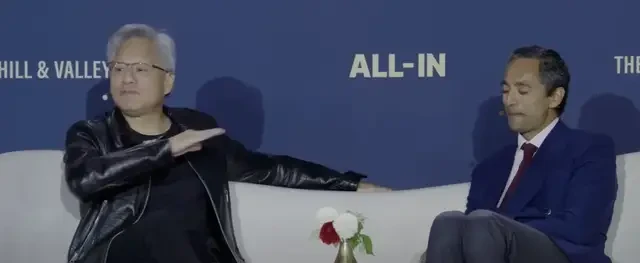
Podcast clips travel farther than compensation policy. Jensen Huang’s bit about a “secret option pool” in a leather jacket is catnip for feeds. I cover chips and how markets price AI infrastructure, so I treat the joke as a signal, not a lifestyle story: NVIDIA is telling the market that talent allocation is as strategic as GPU allocation—and that slow HR processes lose auctions.
I was not in the room. I am working from public remarks attributed to Huang’s All-In appearance and the surrounding industry context. Where numbers are colorful ($1B researcher packages, pocket inventory lore), I flag them as anecdotal claims, not audited figures.
The real claim under the joke
Strip the jacket and you get three operational theses:
- Speed beats ceremony. Spot equity for standouts without waiting for an annual cycle.
- Pay the scarce human may beat buying a 150-person lab at startup prices—if you can retain them.
- Open source is oxygen for startups that cannot train frontier stacks alone; reasoning-era models raise the value of people who can steer them.
Those theses matter whether or not anyone literally carries paperwork in a coat.
How I pressure-test “fast comp” as a strategy
Who can actually do this?
Instant grants need: liquid equity story, board tolerance for dilution, tax/compliance machinery, and managers who will not turn surprises into favoritism scandals. Most enterprises cannot copy NVIDIA’s posture without creating legal and culture debt. Copying the meme without the balance sheet is how you get lawsuits, not loyalty.
What breaks when one person reviews 40k comp plans?
Centralized, ML-assisted review can cut latency. It also creates a single point of narrative failure: if the hero CEO is the system, succession and audit become fragile. I want to see distributed approval with a fast path—not a cult of the pocket.
M&A vs. mega-grants
Huang’s contrast—spend tens of billions to buy a lab versus pay one researcher a fortune—is a useful CFO question. My field rule: buy a company for products, data, and distribution; pay individuals for irreplaceable judgment. If you only need judgment, M&A integration tax is often waste. If you need a product line, a single hire does not ship it.

Adjacent signals I care about more than the jacket
GPU allocation as “PO first.” First-come purchase orders sound fair until capital access becomes the moat. That is a market-structure story: who can prepay, who can plan power and buildings a year out, who eats delay.
Residual value talk on Hopper-class iron. Claims about year-1 / year-2 residual value and CUDA-driven uplift are bullish for longer refresh cycles—but only if your software stack actually captures those gains. Hardware residual without software compounding is a spreadsheet fantasy.
“Everyone is a programmer” equalizer. As rhetoric, it sells tools. As labor economics, it raises the premium on people who can specify, verify, and own systems—the same people the pocket-option story is really about.
What I tell operators
- If you are competing for AI researchers, measure time-to-offer and time-to-grant, not slogan warmth.
- If you cannot move equity in days, stop LARPing NVIDIA culture and fix approval chains.
- Treat open-source dependency as a talent multiplier for startups and a commoditization risk for closed stacks—plan hiring against both.
Bottom line
The leather jacket is theater. The EEAT-relevant story is capital and process: AI talent markets clear on speed, equity credibility, and open-source leverage. I will keep watching order books and retention packages—not wardrobe bits—when I judge who is winning.
Comments
Sign in to join the discussion and leave a comment.
Sign in with Google