I see BAAI and Tsinghua University leveraging their new foundation model to crack a stubborn neuroscience problem. This isn’t just academic vanity; it’s a proof-of-concept for how proprietary AI stacks can accelerate basic biological discovery. For investors watching the “AI for Science” narrative, this collaboration signals that the infrastructure layer is finally maturing beyond simple pattern recognition into causal hypothesis testing.
On June 4, 2026, researchers from the Beijing Academy of Artificial Intelligence (BAAI) and Tsinghua University announced new progress on this issue. Their findings, titled “Memory Reactactivation Underlies Experience-Dependent Adaptive Regulation of Sleep,” were published in the international academic journal Science. Dr. Lei Bo, head of the WuJie·Brainμ Model Team at BAAI, and Professor Zhong Yi from Tsinghua University’s School of Life Sciences served as co-corresponding authors for the study.

The interplay between sleep and memory has long been a focal point in neuroscience. While extensive past research indicates that sleep facilitates memory consolidation, it remains unclear whether the reverse is also true: specifically, how memory reactivation—a key component of brain activity during sleep—might influence sleep architecture and adaptively participate in the regulation of sleep homeostasis. Addressing this question requires capturing causal relationships between memory-related neural activities and changes in sleep states from multimodal, long-term data on both sleep and memory, thereby validating their potential regulatory roles.
The study demonstrates that memory reactivation during sleep participates in regulating sleep dynamics, providing new experimental evidence for understanding the bidirectional mechanisms between “memory and sleep.” As a technical support for data analysis in this research, Brainμ0, a multimodal foundation model for brain science developed by BAAI’s AI + Neuroscience team, supported key analytical steps such as multimodal memory-sleep data analysis, assisting scientists in hypothesis verification, and sleep state identification. This highlights the potential of AI-for-neuroscience foundation models to contribute to complex basic life sciences research.
Honestly, the Science publication validates Brainμ’s utility for causal inference, not just correlation. I think bAAI is building a defensible moat around multimodal neural data interpretation.
1 BAAI’s Self-Developed Neuroscience Foundation Model Brainμ: An AI Analysis Base for Multimodal Neurodata
Modern neuroscience data has entered an era characterized by multimodality, high throughput, and long-term recording. Consequently, the strong heterogeneity of multi-source neural data and the difficulty in achieving unified representation and joint analysis have become common challenges in basic research. To address this need, BAAI developed Brainμ0, a multimodal foundation model for brain science. Its core module, Brainμ Tokenizer, converts various types of neural signals—such as EEG, two-photon calcium imaging data, and Neuropixels recordings—into aligned neural activity representation tokens. This enables the analysis of multimodal data within a unified framework. Coupled with its accompanying foundation model decoder, Brainμ0 supports tasks essential to basic neuroscience research, including cross-subject and cross-scenario data annotation, identification of specific neural activity events, prediction of neural activity, and cross-modal alignment.
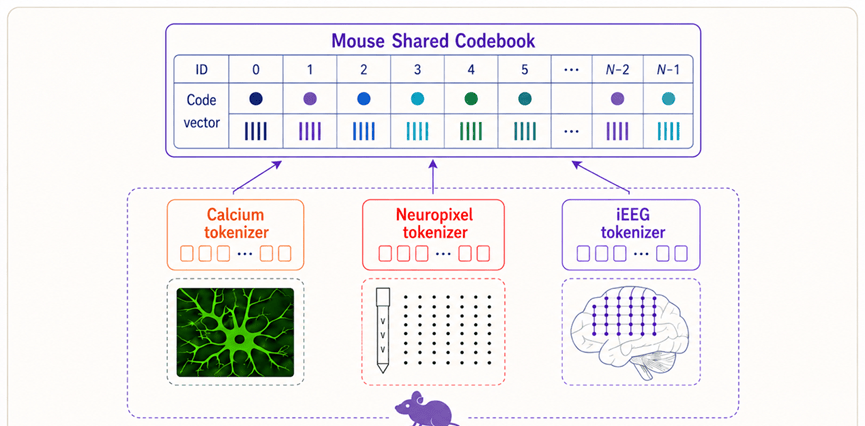
Figure 1: Schematic structure of Brainμ Tokenizer (Mouse)
(Image source: AI-generated)
From “Sleep Promotes Memory” to “Memory Regulates Sleep”: AI Foundation Models Assist in Hypothesis Verification
I see a clear shift here. The research team is moving beyond simple pattern recognition. They are using Brainμ’s multimodal capabilities for causal inference. This is an AI + Basic Research approach that I find compelling.
Brainμ0 processed sleep EEG signals alongside memory-related single-cell two-photon calcium imaging signals. The model confirmed that neural signals of memory activity can effectively predict the occurrence of sleep phase changes. It also distinguished between “Memory Reactivation Sleep” (MRS) and “Non-Memory Reactivation Sleep.” This provides robust support for data-driven hypothesis verification in neuroscience.
The way I see it, zero-shot generalization across subjects proves foundation models are ready for rigorous scientific validation.
The team was the first to confirm that negative memory reactivation during sleep exacerbates sleep fragmentation. It increases organismal alertness. Conversely, positive memory reactivation significantly enhances sleep continuity and resistance to interference. This discovery advances our understanding of sleep regulation. Sleep is not merely a passive recovery process. It may also be dynamically influenced by past experiences and memory content.
This establishes a new scientific framework for the bidirectional regulatory mechanisms between sleep and memory. It offers novel mechanistic perspectives and therapeutic approaches for sleep disorders associated with mental illnesses such as depression and anxiety.
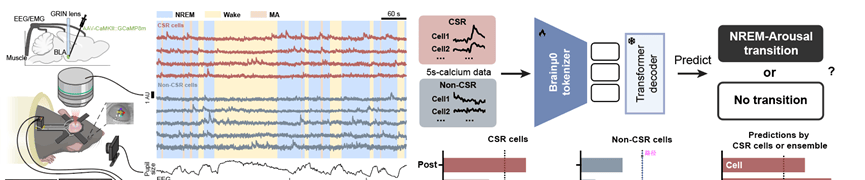
Figure 2: Brainμ model assists neuroscientists in verifying the dynamic relationship between memory activity and sleep.
Honestly, validating bidirectional mechanisms opens a new frontier for treating psychiatric comorbidities.
3 From Mechanism Verification to Automated Analysis: Brainμ Establishes a New “AI + Neuroscientist” Paradigm
I see the real value here isn’t just in the model itself, but in how it solves the generalization problem that plagues specialized AI tools. Most niche algorithms fail when experimental conditions shift. Brainμ0 avoids this trap by ingesting over 70,000 nights of sleep records from diverse genetic backgrounds and task paradigms. This breadth gives it a robustness that single-task models simply cannot match.
I followed the collaboration between BAAI and the National Institute of Biological Sciences (NIBS) closely. They applied Brainμ0 to automate the analysis of mouse sleep neural activity. Traditional algorithms degrade rapidly when facing new transgenic strains or novel experimental setups. This instability has long limited their utility in rigorous research settings.
The results from Professor Liu Qinghua’s team at NIBS are telling. Brainμ0 processed long-term data across different transgenic strains without retraining. It passed a “model + human expert” bidirectional verification involving over 3,000 nights of sleep data. This scale of validation is rare for foundation models in biology.
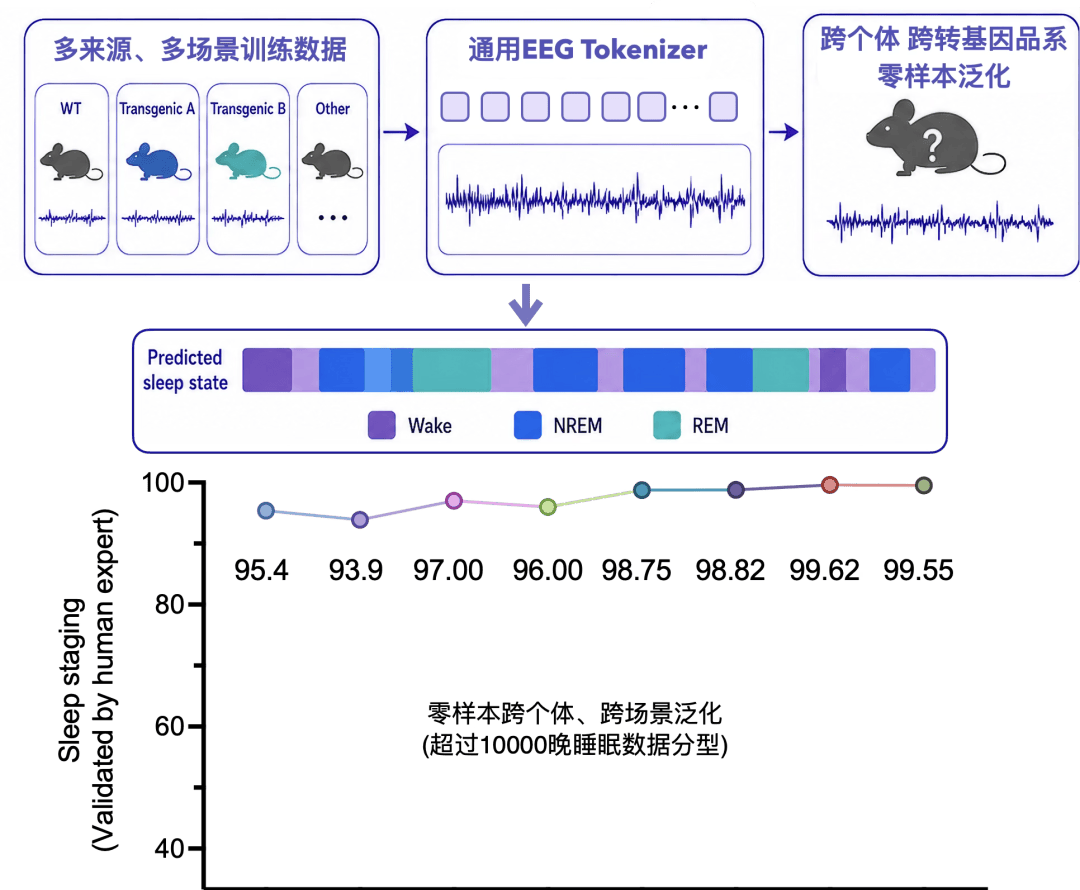
Figure 3: Brainμ assists in cross-scenario, cross-subject automated classification of mouse sleep.
(Image source: AI-generated)
I note the infrastructure behind this success. The research team collaborated with Huawei to optimize inference on Ascend super-nodes using full-stack AI4S capabilities. This support enabled continuous automated analysis for over 10 months. Crucially, the system achieved zero-shot cross-strain generalization. Its output maintained high consistency with results from professional doctoral students in sleep neuroscience throughout that period.
I think zero-shot generalization across strains proves superior to retraining specialized models for every new experiment.
The architecture offers flexible adaptability through unified neural signal representations and LLM-based reasoning. This allows it to handle different experimental paradigms without architectural changes. BAAI intends to use this as a blueprint for integrating AI into basic neuroscience. They aim to tackle the high complexity and cross-scale data challenges inherent in brain science.
The way I see it, unified representation beats fragmented tools when dealing with multimodal biological noise.
This shift marks a move from hypothesis verification to automated discovery. I believe this “AI + Neuroscientist” paradigm will accelerate breakthroughs in understanding memory, emotion, and brain diseases. It positions AI not just as an analysis tool, but as a core driver of scientific inquiry.
Honestly, automation at this scale frees researchers to focus on interpretation rather than data cleaning.
Original Link:
Comments
Sign in to join the discussion and leave a comment.
Sign in with Google